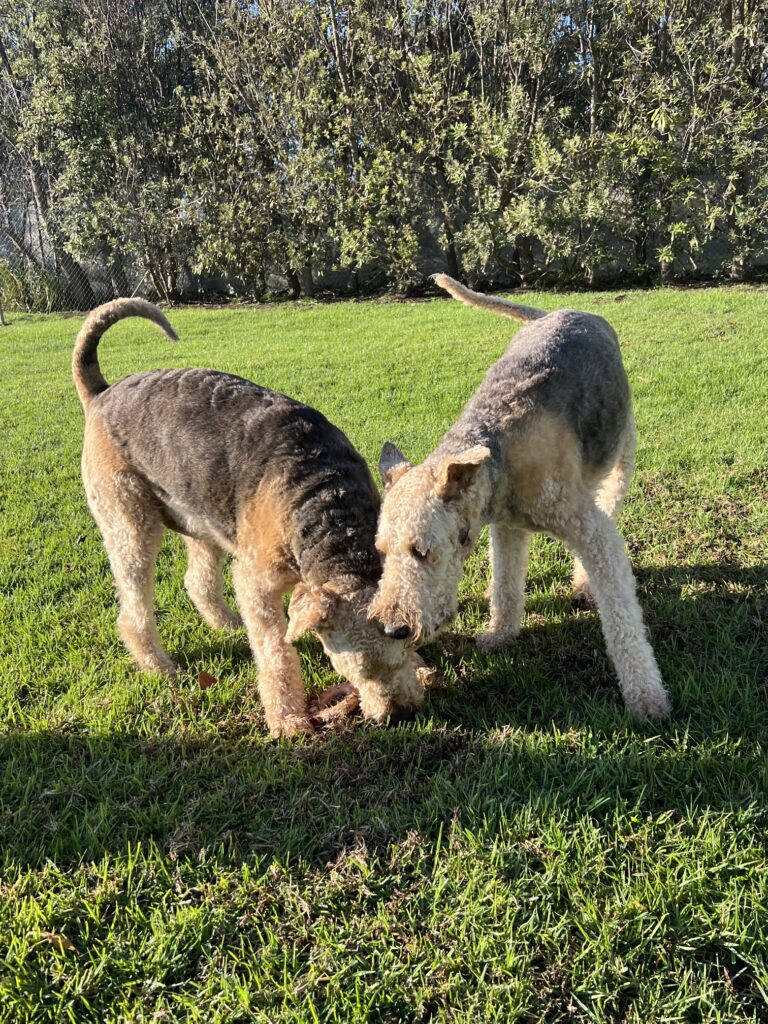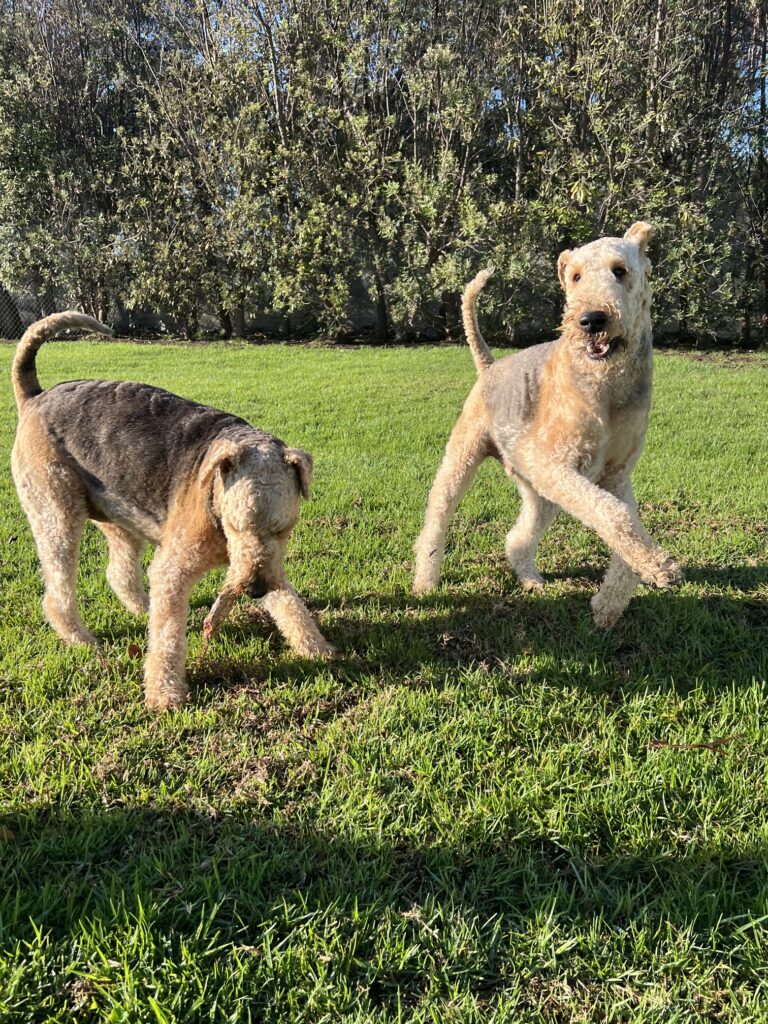
The Airedale Terrier; strong, intelligent, and full of personality, known as the “King of Terriers” for good reason. Discover everything you need to know about this energetic and loyal breed, from their fascinating history to their grooming and exercise needs.
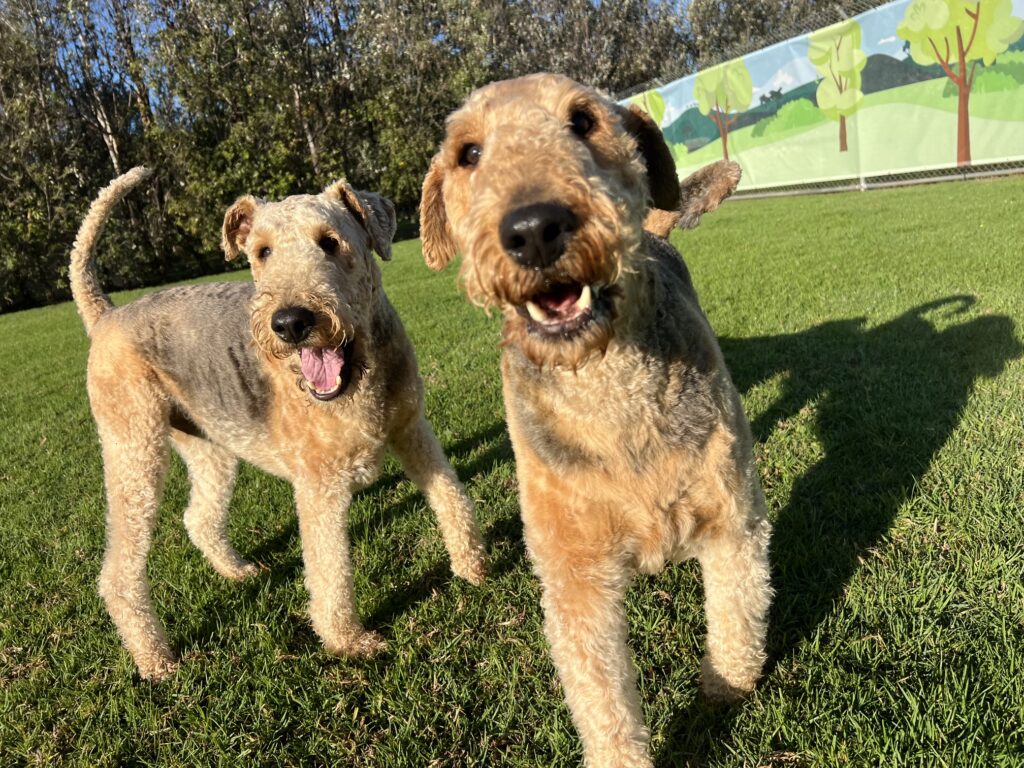
Maccie & Robbie, the Airedale Terriers, our May Dogs of the Month for 2026.
🐾 The Airedale Terrier
Known as the “King of Terriers,” the Airedale Terrier is the largest of all terrier breeds. Standing up to 61cm tall for males and 58cm for females, and weighing as much as 29kg, they are far bigger than most of their terrier relatives. Their strong and athletic appearance includes a long, flat head, deep chest, and perfectly straight front legs, giving them a confident and powerful stance.
✂️ Grooming and Coat Care
The Airedale has a double coat made up of a hard, wiry outer coat and a soft undercoat. Their coat is generally straight, although a slight wave is acceptable. They are found only in tan and black or tan and grizzle colouring.
Their coat requires a significant amount of maintenance to keep it healthy and tidy. Traditionally, their coat should be hand stripped or plucked twice each year to maintain the correct texture and minimise shedding. When properly maintained, they shed very little hair. However, regular professional grooming appointments throughout the year are highly recommended.
Daily brushing is important to prevent mats and knots from forming, especially as their coat easily collects sticks, grass, and outdoor debris that can irritate the skin. Hair between the paw pads also grows quickly and requires regular trimming. If the Airedale keeps its distinctive beard, it should be washed daily to remove food build up and prevent odours or skin irritation.
🏰 History and Origins
The Airedale Terrier originated in Yorkshire, England, around the mid-1800s. Early versions of the breed looked very different from the modern Airedale and were originally known as the Bingley Terrier or Waterside Terrier. The Bingley Terrier had a more barrel shape body and shaggier coat as well as a pointer face. The breed was developed from now extinct terrier types and was primarily used to hunt and control vermin in the Valley of Aire, which is where the breed takes its name.
Over time, the Airedale’s intelligence, courage, and versatility saw them used for much more than vermin control. They were later used to hunt larger game in countries including India, Canada, and Africa. Their working abilities also made them valuable as police dogs, guard dogs, and military dogs during World War II.
🎾 Exercise and Personality
The Airedale Terrier is an energetic and highly intelligent breed that thrives in an active home. They require long daily walks and enjoy activities such as running beside their owner, bike riding, swimming, and games of fetch. They are not suited to being left alone in the backyard all day and need both mental and physical stimulation every day.
Without proper exercise and enrichment, an Airedale can quickly become bored and destructive. Their intelligence means they will often find their own ways to entertain themselves, which may not always be appreciated by their owners.
Training and leadership are very important with this breed. Airedales are confident dogs and can become dominant if boundaries are not clear. They respond best to calm, consistent leadership and ongoing training from a strong and patient owner.
👨👩👧👦 Family Life and Health
The Airedale Terrier is a loyal and protective family companion that enjoys being involved in everyday life. They generally do well with children, although their size and playful nature can sometimes be too rough for very young kids.
When socialised well from a young age, they can get along with other dogs. However, it is important to remember that they are natural hunters and should not be fully trusted around smaller household pets.
Overall, the Airedale is considered a sturdy and healthy breed with relatively few major health concerns. Some individuals may experience hip dysplasia, skin conditions, or eye issues. Their deep chest does make them fall into the higher risk category of bloat, so all precautions should be taken around meal and exercise times. With proper care, they have a life expectancy of up to 12 years and make wonderful companions for active families willing to match their energy and enthusiasm for life.