
The German Shepherd is a well recognized, strong and confident breed of dog. Today, it’s known throughout the world as both a bold working dog and loving family pet that is loyal and protective of those it loves.
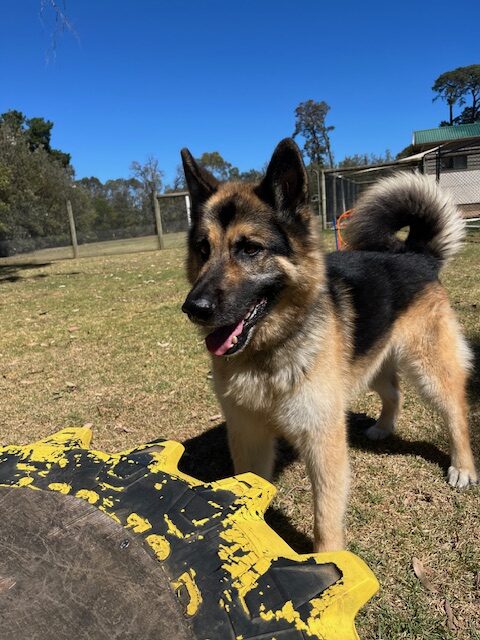
Layla the German Shepherd mix and our Dog of the Month for February 2026.
🌍 Origin of the German Shepherd
Today, while the short-haired variety is the most popular, the long-haired variety is recognised in most countries. In Britain, the breed is known as the Alsatian.
The German Shepherd originated, as their name may quickly suggest, in Karlsruhe, Germany. They were created by breeding local herding and farm dogs in a combination of long, short, and wire-haired varieties. The breed was first officially introduced in 1882 and was named the ‘Deutsche Schäferhunde’, which translates to “German Shepherd Dog” in English.
🎯 Purpose
The name of this breed is a clear giveaway of its original purpose. The German Shepherd was bred to herd sheep, but over time its role as a working dog has expanded into many other areas, including search and rescue, police work, military service, disability assistance, and competitive obedience.
🐾 Appearance of the German Shepherd Dog
A strong and sturdy large breed, the German Shepherd presents as a confident and sometimes intimidating dog.
There are two breeding lines of German Shepherd that appear slightly different from one another:
The working line: Closer to the original German Shepherd, this is the type most often seen working in police or military roles. Working-line German Shepherds are bred for stamina and high work drive. They typically have straighter backs and a more athletic build.
The show line: Bred to meet breed standards for the show ring, these German Shepherds have a more sloped back and are often calmer and more docile in temperament.
Their coat colour is most commonly black and tan or sable, but solid black is also acceptable. Some German Shepherds may be white, blue, or liver; however, these colours are not accepted under standard breed guidelines.
A White Shepherd falls into its own breed category and is known by different names in different countries. In Australia, it is known as the White Swiss Shepherd.
Males can grow up to 65 cm and exceed 40 kg, while females tend to grow up to around 60 cm and can weigh over 30 kg.
🧴 Coat Care
Regardless of whether they have a short or long coat, German Shepherds shed year-round and are very heavy shedders during seasonal changes. They require daily brushing to remove dead hair and prevent matting. Brushing should begin at a young age so they become comfortable with it throughout their life.
Thorough undercoat brushing is especially important during seasonal shedding to help remove the thick undercoat.
Checking their coat during wet weather is essential to prevent hot spots caused by moisture being trapped against the skin.
They should be bathed only when necessary to avoid stripping the natural oils from their coat. Regular nail checks and clipping, including the dew claws, are also essential.
💖 Temperament of the German Shepherd
A brave, confident, and fearless dog, the German Shepherd is an intelligent and loving breed that requires a confident owner who understands them well. Boundaries are essential from a young age, as this is a breed that may take control if given the opportunity. Without proper guidance, this can quickly lead to poor behavior, which may become dangerous.
They are extremely loyal and devoted to their owner and family. They are not a breed suited to being left alone in a yard all day and prefer to be involved in family life as much as possible.
They make fantastic guard dogs and will protect their family and home, quickly alerting you to strangers. It is important that they are well socialised with people and other animals from a young age to ensure positive interactions as they mature. With proper socialisation, they can be excellent with other dogs and animals within the home.
The breed can have a reputation for being skittish or anxious, which often stems from poor socialisation and lack of exposure during early development. When raised in a stable and confident environment, they grow into confident, loving, and loyal companions.
Highly intelligent, they learn quickly and thrive when given a job to do. Mental enrichment is essential to prevent boredom, which can quickly lead to destructive behaviours.
At minimum, they require one daily walk; however, a longer run, a jog beside a bike, or time in a large open space is ideal. As a working breed, they have a strong drive to work and need an outlet for their energy.
They are a breed that benefits from a large yard to enjoy when not out exploring and are generally not suited to small apartment living.
🩺 Health
Unfortunately, poor breeding practices over the years have led to several health issues within the breed. Hip and elbow dysplasia are significant concerns, so health screening of breeding parents is essential.
They are also prone to epilepsy, skin conditions, digestive problems, and splenic tumours.
Being a large breed with a broad chest, they are in the high risk category for bloat too, a condition all Shepherd owners should be aware of and know the warning signs.
It is essential to thoroughly research the breed before purchasing a puppy. If rescuing, have a detailed conversation with your veterinarian and arrange a thorough health check to gain a clear understanding of your dog’s condition and any potential issues to monitor.
Be sure to check out our blog on ‘Finding a Responsible Breeder’ so you know the things to be looking out for and ensure that you are purchasing from an ethical breeder with a healthy puppy. For tips on adopting a dog, check out our ‘Adopting A Dog Guide’ here!